




Why wet underfloor heating is becoming the new-build default in the UK
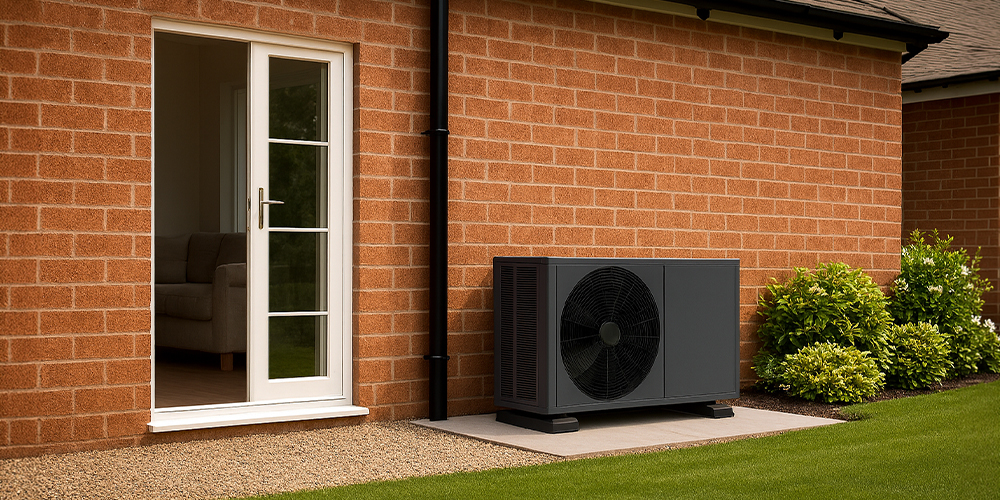
The Future Homes Standard changes the heating equation. Developers and specifiers who get ahead of that now will be in a much stronger position when 2028 arrives.
On 24 March 2026, the government confirmed the Future Homes Standard – the building regulation that will require new homes in England to use low-carbon heating from 2028. In practice, that’s expected to mean heat pumps for most homes. And that means the old assumption that almost any heat emitter will do is no longer safe ground for developers.
That’s why wet underfloor heating is becoming such an important part of the conversation. In the new-build market, it’s starting to look less like a premium extra and more like the sensible default.
Why heat pumps favour wet underfloor heating
Heat pumps don’t work like gas boilers (https://energysavingtrust.org.uk/advice/air-source-heat-pumps/). Boilers run hot – typically 70-80°C – and standard radiators were sized around that. Heat pumps are most efficient at much lower flow temperatures, and the harder you push those temperatures up, the more performance drops away.
The numbers matter. A well-specified air source heat pump running at 35°C can typically achieve a Coefficient of Performance of around 4.0 to 4.2. At 55°C – the sort of temperature often linked to standard radiator assumptions – that same unit can fall to around 2.9, depending on the system and the operating conditions. That’s a big efficiency gap, and it shows up every hour the system runs. For further technical background, see the Heat Pump Association’s guidance.
This isn’t just a technical point. It affects energy bills; SAP outcomes and the carbon performance future compliance models will assess. A new home built around a heat pump but still using higher-temperature heating logic is building in compromise from day one.
That’s where wet underfloor heating makes so much sense. It’s a low-temperature heating system by design, which makes it a far more natural fit for the way future homes are expected to perform.
Why wet underfloor heating in new-build homes makes sense
(See also the UHMA technical guidance)
The case for wet underfloor heating in new-build homes isn’t just about efficiency. It’s also about designing homes around how they’ll actually be heated in the years ahead.
Modern new-build homes are better insulated, more airtight and lower in heat demand than older housing stock. That makes low-temperature heating much more practical. Wet underfloor heating spreads heat evenly across a large surface area, helping maintain comfort without needing higher water temperatures.
For developers and specifiers, that creates a clearer route to a heating system that works with the building fabric rather than against it. It also gets rid of wall-mounted emitters in key living spaces, which gives more layout flexibility and a cleaner finish for buyers.
So in that sense, wet underfloor heating isn’t just a heating option. More and more, it’s part of a whole-house low-temperature strategy. CIBSE offers further guidance on low-temperature emitter design (https://www.cibse.org/knowledge)
UFH downstairs and radiators upstairs is still common – but it’s a compromise
A lot of new-build homes in the UK still follow the familiar pattern of wet UFH downstairs and radiators upstairs. The reasons are easy enough to understand: ground-floor screed is straightforward to work with, upper-floor timber joists have historically made underfloor heating more complicated, and radiators are cheaper and quicker to fit.
But mixed-emitter systems can come with a hidden penalty.
If upper-floor radiators need a flow temperature of 55°C and the ground-floor underfloor heating is designed for 40°C, the heat pump still has to run at the higher temperature to serve both. That means the efficiency benefit of the UFH is being pulled down by the radiator circuit. The whole system ends up performing below what it should if everything had been designed around low temperatures from the start.
As compliance, modelled performance and resident energy bills become more important to both regulation and sales, that compromise gets harder to defend. The closer housebuilders get to 2028, the harder it becomes to justify designing around split-temperature thinking.
Can you use wet underfloor heating upstairs?
Yes – and that matters much more now than it did a few years ago.
Upper-floor installation used to mean screed weight, extra floor build-up and slower response times, all of which were real barriers on standard timber-joist construction. But system design has moved on.
Modern between-joist and low-profile overlay systems make wet underfloor heating upstairs far more practical than it once was. Some sit within the joist zone, so there’s no added floor height at all. Others are slim enough to be designed in from the outset without causing major knock-on issues elsewhere. And for apartments or acoustically sensitive applications, there are now systems designed to help with sound performance as well as heat output.
In new build, where floor build-ups, thresholds and door clearances can all be designed in early, those systems are much easier to integrate than they are in retrofit. That’s why the technical case against whole-house wet underfloor heating is a lot weaker than it used to be.
Can radiators work with heat pumps?
They can, but that doesn’t automatically make them the best answer.
Radiators aren’t incompatible with heat pumps. Oversized low-temperature panels, aluminium radiators and fan-assisted units can all be designed to work at lower flow temperatures. In the right application, they can still make sense.
But they usually need more wall area, more careful system design and, in many cases, higher operating temperatures than underfloor heating. That’s the real difference. Radiators can work with heat pumps, but wet underfloor heating is still the more natural fit for low-temperature heating in new-build homes.
And for developers, that matters because it affects not just how the system looks on paper, but how well it performs in the real world.
Why whole-house wet underfloor heating is likely to grow
The direction of travel is already clear. Around a quarter of new homes built in the UK in 2025 already included a heat pump – up sharply from just a few years earlier. The government has set a target of 600,000 installations a year by 2028. At the same time, the UK underfloor heating market continues to grow steadily.
These are not small changes. They point to a housing market being redesigned around low-carbon, low-temperature heating.
That’s the strongest argument for wet underfloor heating becoming the new-build default in the UK. It’s not that it’s the only option. It’s that it’s increasingly the lowest-risk, highest-performing one. Homes designed around one consistent low-temperature heating system from ground floor to roof are far better placed to get the best out of a heat pump, cut modelled energy use, reduce running costs for residents and line up more cleanly with where regulation is heading.
That’s not to say every development will switch to whole-house wet UFH overnight. Site constraints are real, and mixed-emitter approaches will stay on some schemes for some time. But as 2028 gets closer, it becomes harder to justify designing homes around old gas-boiler assumptions and then trying to make heat pump technology fit around them.
For developers, housebuilders and specifiers planning homes for the Future Homes Standard era, the question is shifting. It’s no longer whether wet underfloor heating has a place in new build, but whether it now makes more sense to design the whole home around it from the outset.
Planning for 2028 and beyond? Wet underfloor heating gives new homes a low-temperature heating system designed to work with heat pumps, support compliance and deliver better long-term performance (Home Energy Model FHS guide). For developers looking to future-proof specifications, whole-house wet UFH is becoming less of an upgrade and more of a strategic decision.
Need help or have questions?
Contact us today to speak with our team or request a quote.
Explore our UFH systems to see what makes Ambiente different.


