




Why Stainless Steel Reigns Supreme in Underfloor Heating Manifolds
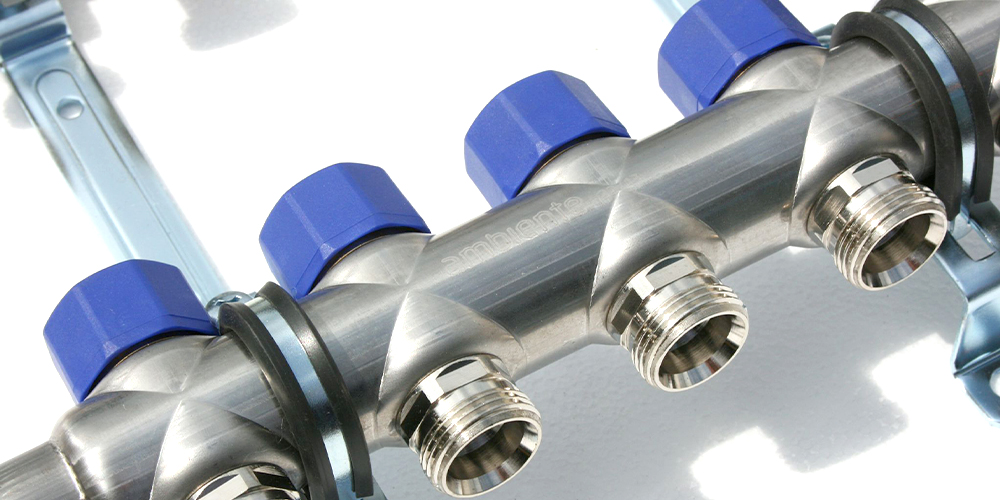
Choosing the Right Metal: A Comprehensive Look at Stainless Steel and Its Alternatives
Selecting the right metal is crucial for any project, impacting performance, longevity, and cost. This is especially true for critical components like Underfloor Heating (UFH) manifolds, which efficiently distribute heated water across multiple zones. Stainless steel, a versatile family of alloys, often emerges as a top contender. This article explores its key characteristics, compares it to common alternatives like brass and aluminium, and highlights its long-term value, particularly in Ambiente UFH systems.
Understanding Stainless Steel: Composition, Properties, and Grades
Different grades offer tailored properties:
- 304 Stainless Steel: The most common grade (18% chromium, 8% nickel), offering good corrosion resistance and formability for general uses like kitchenware and architectural panels. High-quality UFH manifolds, such as those supplied by Ambiente UFH, are often made from AISI 304 stainless steel, offering excellent corrosion resistance and strength.
- 316 Stainless Steel: Contains 2-3% molybdenum, significantly boosting resistance to chlorides, harsh chemicals, and marine environments. Ideal for outdoor sinks and medical instruments. It also has higher tensile strength and hardness than 304. While 316 stainless steel offers excellent corrosion resistance and good resistance to mineral build-up inside the manifold, its lower thermal conductivity compared to brass can make it less practical for some UFH applications.
- Duplex Stainless Steel: Features a balanced two-phase microstructure (50% austenite, 50% ferrite), providing high strength and superior corrosion resistance, especially in aggressive environments like coastal areas and chemical plants. Despite higher initial cost, its durability leads to substantial long-term savings.
Stainless Steel vs. The Alternatives: A Detailed Comparison
In terms of corrosion resistance, it is important to distinguish between rust and corrosion. Aluminium does not rust because it contains no iron, but it can corrode, primarily affecting its appearance. It forms a natural oxide layer that provides some protection, but it remains susceptible to pitting corrosion, especially in saline environments.
Stainless steel, with its chromium-induced passive layer, is generally more resistant to a wider range of corrosive elements, including moisture, chemicals, and saltwater. Notably, marine-grade 316L stainless steel far exceeds aluminium’s durability and corrosion resistance in high-salt, high-pollution coastal areas. This means that for applications requiring high structural integrity under heavy loads or prolonged exposure to aggressive corrosive agents like chlorides or harsh chemicals, stainless steel, particularly higher grades like 316L, offers significantly greater long-term durability and reliability.
Aluminium is an excellent conductor of both heat and electricity, making it a preferred material for applications where thermal or electrical conductivity is essential, such as electrical wires and heat sinks. Stainless steel, by comparison, has lower thermal and electrical conductivity.
Regarding fabrication and malleability, aluminium is a softer metal, making it easier to cut, bend, form, and machine into intricate shapes and tight tolerances. Stainless steel, being less malleable and tougher, is generally more challenging to work with, often requiring specialised tools and techniques for machining and welding. Therefore, the “better” material is not universal but depends entirely on the critical performance requirements of the specific application.
Stainless steel often provides a more balanced and robust solution for a wider range of demanding, long-lifespan applications where overall durability and corrosion resistance are paramount. For UFH manifolds, aluminium is generally advised against due to its vulnerability to corrosion if not properly coated.
In contrast, stainless steel manifolds, as supplied by Ambiente UFH, offer superior corrosion resistance to rust, oxidation, and chemical corrosion compared to brass, and crucially, they carry no risk of dezincification. They are also more resistant to mechanical stress than uncoated brass and can last 20+ years. While stainless steel has lower thermal conductivity than brass, potentially affecting system response time, it offers good resistance to scale build-up and can be lighter than brass manifolds.
Notably, Ambiente UFH stainless steel manifolds can achieve higher flow rates (up to 20% higher) and have greater mechanical strength (AISI 304L stainless steel is 20.93% stronger than CW614N brass). It’s important to note that cheaper stainless-steel manifolds are often welded, and poor weld quality can lead to leaks and premature failure. Therefore, selecting high-quality, well-fabricated stainless steel is crucial for UFH applications.
Addressing Common Misconceptions about Stainless Steel
- “Stainless steel is rust-proof”: It’s highly resistant but not immune, especially in harsh, high-chloride environments. Regular cleaning is essential.
- “Stainless steel requires no maintenance”: While low maintenance, it needs regular cleaning to prevent contaminant build-up and preserve its protective layer.
Fabrication Considerations for UFH Systems
For UFH manifolds, it’s important to note that cheaper stainless-steel manifolds are often welded, and poor weld quality can lead to leaks and premature failure. High-quality stainless-steel manifolds, like those from Ambiente UFH, are manufactured with stringent testing to ensure structural integrity and a long service life for your underfloor heating system.
In the complex world of material selection for Underfloor Heating (UFH) manifolds, stainless steel consistently stands out as a superior choice for a wide range of demanding applications. Its inherent corrosion resistance, stemming from its unique chromium oxide layer, ensures exceptional durability and significantly reduces long-term maintenance costs for UFH systems.
While brass manifolds have been a traditional choice for UFH due to their good thermal conductivity and ease of installation, they are susceptible to dezincification in certain water conditions, which can compromise their structural integrity over time. Stainless steel manifolds, particularly those made from high-quality 304 grade, eliminate this risk, offering superior resistance to rust, oxidation, and chemical corrosion. Aluminium manifolds, while lightweight and cost-effective, are generally advised against due to their vulnerability to corrosion if not properly coated.
Although stainless steel has lower thermal conductivity than brass, its robust structural integrity, resistance to scale build-up, higher flow rates, and mechanical strength contribute to a more reliable and long-lasting UFH system. From an environmental perspective, stainless steel is a leader in sustainability, boasting high recyclability rates and the ability to be reused indefinitely without degradation. Its extended lifespan further contributes to resource conservation by minimising the need for frequent replacements.
Despite common misconceptions about its initial cost, stainless steel’s total cost of ownership often proves more economical over time due to its unparalleled durability and minimal maintenance requirements.
For UFH systems, choosing stainless steel means investing in a manifold that offers superior long-term reliability, excellent corrosion resistance, and a robust structure that can withstand the demands of continuous operation. While initial quality and proper installation are paramount for any manifold material, high-grade stainless steel provides a foundation for enduring performance, making it an optimal choice for projects demanding robust, low-maintenance, and enduring material solutions in underfloor heating.


