




Thin-Screed vs Dry UFH – What the Data Says About Responsiveness and Output
Picking the right assembly for each room – without sacrificing low-temp performance.
“UFH is slow” is yesterday’s soundbite. Responsiveness depends on assembly and controls. Thin screeds and aluminium-plate dry systems respond faster than deep slabs – while still meeting outputs at 35-45 °C with the right pipe spacing and finishes.
The physics in one paragraph
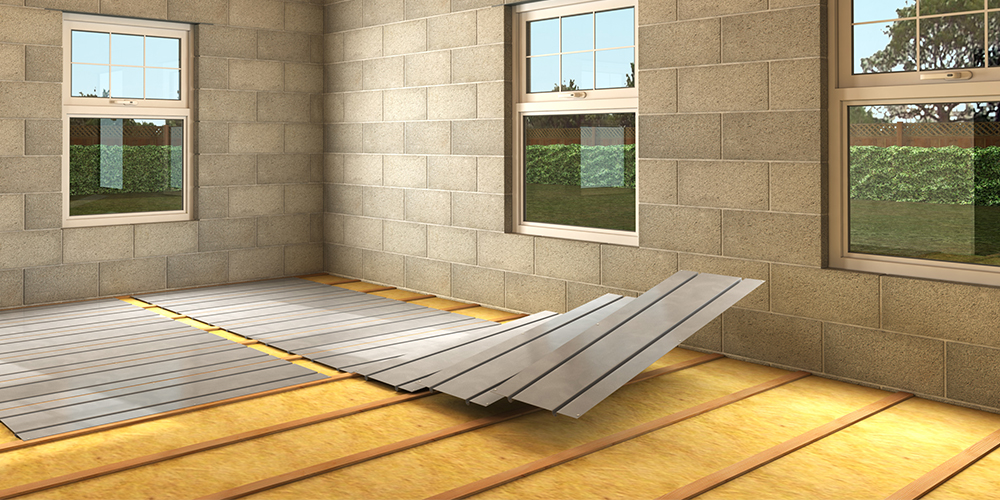
- Thermal mass & conductance. Screed systems offer high thermal mass. Thin screeds reduce heat up time. Aluminium plates increase conductance and improve response in joisted floor scenarios.
- Output is about R-values and spacing. The governing variables remain floor-finish resistance and pipe spacing at a given flow temperature. The Heat Emitter Guide quantifies these for both screeded and plate systems.
When to choose which
- Thin screed (30-50 mm) over insulation. Best for refurb ground floors where you need faster pick-up but want the uniformity of screed.
- Aluminium-plate dry systems in timber floors. Best where build-up depth is constrained and you need quicker control response (e.g. bedrooms).
- Deep slabs (new build). Ideal for base-load comfort with highly stable temperatures. Pair with weather compensation to avoid overshoot and leverage its unique advantage as a thermal battery. With smart controls, the slab can be “charged” with cheap, off-peak electricity or surplus solar energy, releasing heat steadily throughout the day.
Floor finishes and surface temperatures
Keep finishes within recommended thermal resistances. BS EN 1264 limits typical occupied-area surface temps (~29 °C), with localised higher strips permissible near external walls.
Commissioning remains non-negotiable
Warm-up cycles per BS 8204/EN 1264-4 prevent damage and set the stage for accurate balancing and control tuning.
Need help or have questions?
Contact us today to speak with our team or request a quote.
Explore our UFH systems to see what makes Ambiente different.


