




Housebuilder Playbook: Value-Engineering Low-Temperature Heating Without Compromising Comfort
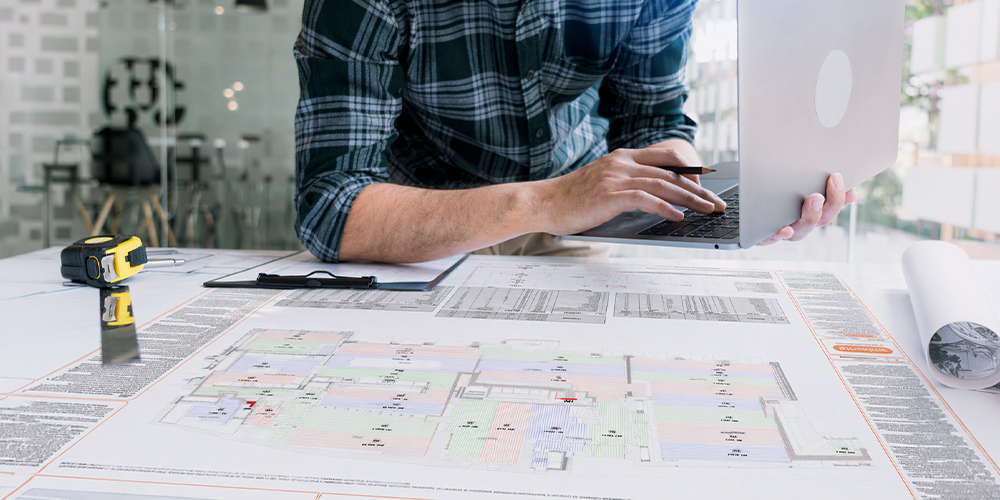
How to support Future Homes Standard/Home Energy Model (FHS/HEM) goals, control costs, and keep homeowners comfortable.
With FHS/HEM reshaping compliance, the smartest value engineering is about getting the fundamentals right first time. A fabric-first approach, low-temperature emitters, and controls that are easy to live with all have a role to play – and in that playbook, UFH deserves serious consideration.
The four-move strategy
- Start with fabric to reduce heat loads
Better fabric lowers heat demand per square metre, making it easier to design UFH at wider pipe centres and lower flow temperatures. That can help reduce plant requirements, improve efficiency, and support both FHS intent and HEM modelling. - Standardise UFH details across house types
Build a library of screed and plate details linked to heat-loss bands, with pipe spacing aligned to the Heat Emitter Guide. For apartments, develop combined thermal and acoustic insulation details that address Part L and Part E in one solution. Standardisation improves design consistency, procurement, and site delivery across the whole programme. - Specify controls homeowners actually understand
Choose room thermostats with a simple interface and back them up with a clear handover pack and live demonstration. Explaining set-and-forget operation helps prevent misuse, improve comfort, and reduce avoidable callbacks. - Treat commissioning and QA as part of the product
Build photo evidence of insulation continuity, flushing and dosing certificates, and warm-up records into the standard handover pack. Done properly, this reduces defects, supports warranty requirements, and gives your team a cleaner audit trail if issues arise later.
Why this is a business case, not just a compliance case
This approach delivers more than regulatory sign-off. Lower running costs, stable radiant comfort, fewer cold spots, and less wall-space conflict than radiators can all translate into fewer post-handover complaints and a more repeatable delivery model across sites.
Designing homes around low-temperature heating now reduces the risk of compromise later. As the market moves towards heat pumps and low-flow-temperature systems, that creates a clear advantage: a more future-ready specification, a more repeatable delivery model, and a better experience for the homeowner.
Need help or have questions?
Contact us today to speak with our team or request a quote.
Explore our UFH systems to see what makes Ambiente different.


