




Future-Proofing UK Projects: Why Ambiente Underfloor Heating is the Smart Choice for Builders & Renovators

I. Introduction: The Dawn of a New Era in UK Homebuilding
The UK construction sector is undergoing a profound transformation, driven by ambitious environmental targets and evolving homeowner expectations. This isn’t just about building more homes; it is about constructing properties that are smarter, more efficient, and inherently greener, aligning with the demands of a rapidly changing climate and energy landscape. As leading underfloor heating (UFH) manufacturers and suppliers direct to the trade, Ambiente UFH is at the forefront of this shift, providing the solutions house builders and large-scale property renovators need.
A significant challenge shaping this new era is the impending Future Homes Standard (FHS). From 2025, all new homes in England must be “zero carbon ready”. This is not merely a regulation; it represents a fundamental shift demanding absolute independence from fossil fuels for heating and hot water. The government’s stance is unequivocal: “There is no practical way to allow the installation of fossil fuel boilers while also delivering significant carbon savings and ‘zero-carbon ready’ homes”. This legislative push aims to cut carbon emissions by a substantial 75-85% compared to 2013 levels.
The FHS is explicitly a new building regulation set to come into effect in 2025, with legislation anticipated by December 2026 and full compliance required by December 2027. The ban on fossil fuel boilers in new builds is a direct mandate. For house builders and large-scale property renovators, this means that adopting low-carbon heating solutions is not an optional upgrade but a compulsory requirement to continue operating in the new build market. This regulatory shift creates an immediate and non-negotiable demand for compatible heating systems. For businesses, this translates into a strategic imperative: early adaptation ensures compliance, avoids the significant financial burden of retrofitting outdated systems and positions companies as market leaders in a rapidly evolving sector. It is about securing future projects and maintaining competitiveness, rather than simply meeting a minimum standard.
This definitive trajectory for heat pump-compatible solutions finds its quintessential partner in underfloor heating (UFH). Ambiente UFH systems are rapidly becoming the default specification for new developments, driven by superior energy ratings, unmatched occupant comfort, and significant reductions in carbon emissions.
II. Navigating the Future Homes Standard: UFH as Your Compliance Catalyst
The Future Homes Standard mandates that new homes be highly energy-efficient, equipped with low-carbon heating systems, and often include solar PV. The latest revision to Part L of the Building Regulations, which came into effect in June 2022, serves as a crucial stepping stone towards the FHS, explicitly aiming to improve energy performance in domestic buildings. A significant requirement of Part L is that central heating systems must be designed for a maximum flow temperature of 55°C, representing a substantial reduction from traditional systems that typically operated at around 80°C. This directly supports the FHS goal of preparing homes for future low-carbon heating technologies. Part L also mandates airtightness testing for all properties to prevent excessive heat loss through air leakage.
Ambiente Underfloor heating inherently aligns with these stringent requirements. UFH systems are specifically engineered to operate at optimal low flow temperatures, typically between 35–50°C, which is precisely where heat pumps achieve their highest efficiency. This inherent low-temperature operation makes UFH the ideal match for FHS-ready homes powered by highly efficient heat pumps. Beyond direct compliance, UFH contributes to superior SAP scores, which are essential for enhancing property energy ratings and ensuring Part L compliance. The improved insulation levels typically found in new builds create ideal conditions for UFH to operate at its peak, maximising its efficiency and helping to meet modern building standards.
The FHS and Part L regulations are not isolated to heating systems but encompass a holistic approach to building efficiency, including “high energy efficiency in building fabric” and “mandatory airtightness testing”. UFH’s optimal performance is achieved in properties with superior insulation and airtightness. This indicates a direct relationship: investing in UFH naturally encourages and complements broader improvements in the building envelope. For builders, this means that specifying UFH is not just about selecting a heating system; it is about adopting a component that actively supports and enhances the overall energy performance of the entire structure. This leads to better Energy Performance Certificate (EPC) ratings, reduced carbon emissions, and a more comfortable, cost-efficient home for the end-user, all of which are powerful selling points and contribute to a stronger market position. It positions the builder as one who delivers truly “zero-carbon-ready” and “highly energy efficient” homes.
III. Unlocking Peak Efficiency: The UFH & Heat Pump Synergy
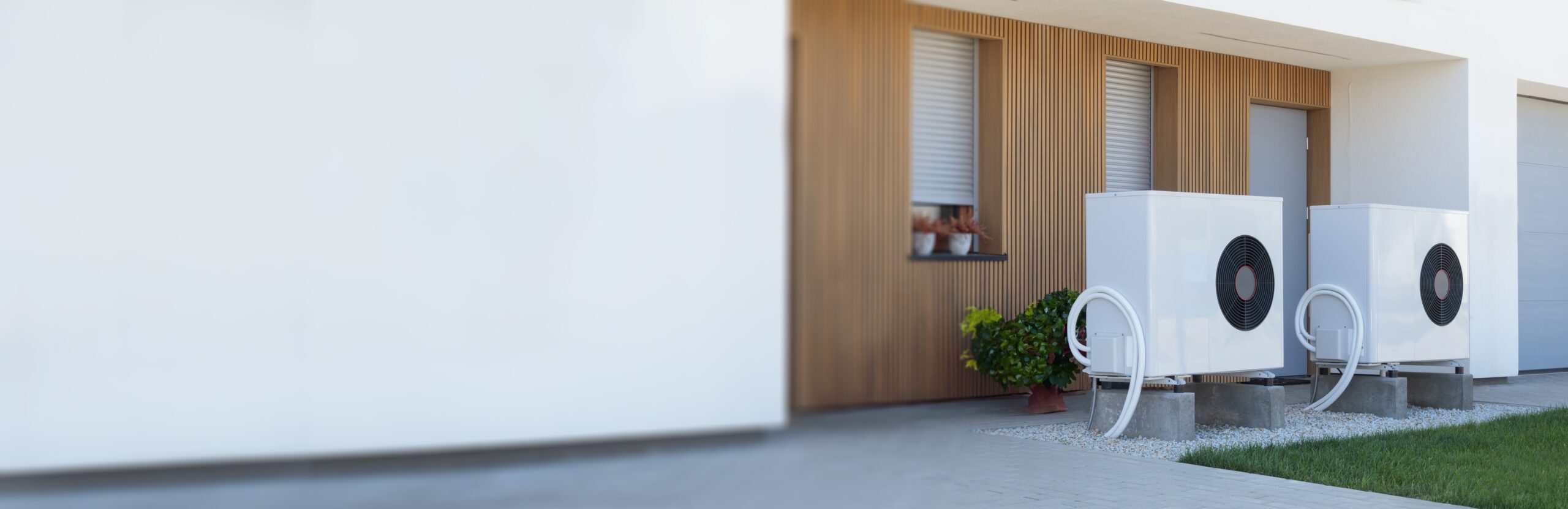
The synergy between wet underfloor heating and air source heat pumps (ASHPs) is often described as a “match made in energy-saving heaven”. Both systems run most effectively at lower temperatures, making them inherently compatible for achieving maximum efficiency.
Consider the operational difference: traditional radiators typically require scorching hot water, around 70-80°C, to effectively heat a room. In stark contrast, Ambiente UFH systems can create a beautifully warm home with water that is only lukewarm, typically operating at just 35-50°C. This lower operating temperature is the key to significant energy savings. A heat pump’s Coefficient of Performance (CoP) or Seasonal CoP (SCOP) is directly influenced by the temperature difference between the heat source (ambient air for ASHPs) and the heat sink (the water circulating in the heating system). The lower the required flow temperature, the less work the heat pump has to do, and consequently, the higher its efficiency. Since UFH operates at significantly lower temperatures, it allows the heat pump to operate within its optimal efficiency range. This is not just about UFH being efficient, or heat pumps being efficient in isolation; it is about their combined effect creating a super-efficient heating system that far surpasses the performance of traditional setups. For developers, this means delivering homes with genuinely low running costs and a reduced carbon footprint, which are powerful selling points for environmentally conscious and budget-aware buyers. It also unlocks the full potential of heat pump technology, which is crucial given the FHS mandates.
These efficiencies translate into quantifiable savings. With Ambiente UFH, heat pumps consistently achieve a CoP of up to 3.7, a remarkable improvement compared to CoPs as low as 2.5 often seen with traditional radiators at 5°C ambient conditions. The Energy Saving Trust further states that ASHPs can achieve a SCOP above 3, meaning for every unit of electricity used, three or more units of heat are produced. This higher efficiency directly leads to dramatically lower running costs and a substantial reduction in carbon emissions. Independent testing at Salford University’s Energy House 2.0 unequivocally demonstrated 25–40% higher system energy efficiency compared to radiator systems and up to 32% lower heating costs for homeowners with UFH. For context, lowering a boiler’s flow temperature by just 20°C typically uses 12% less gas.
The substantial energy efficiency gains (25-40% higher system efficiency) and direct cost savings (up to 32% lower heating costs) are not static figures but become increasingly valuable in a market characterised by “volatile energy prices”. By offering homes with inherently lower heating costs, developers provide a tangible benefit that directly addresses a major concern for future occupants: energy bills. This positions properties with UFH as a future-proof investment for homeowners, offering long-term financial stability and peace of mind. For developers, this translates into a distinct competitive advantage, as they can market homes that are not only compliant with future regulations but also offer a compelling economic benefit that resonates deeply with buyers in an era of rising living costs.
IV. Beyond Efficiency: Unrivalled Comfort & Design Freedom
Beyond its impressive energy credentials, underfloor heating delivers a level of comfort and aesthetic appeal that traditional systems simply cannot match.
Say goodbye to chilly corners and stuffy spots. Wet underfloor heating delivers a truly luxurious level of comfort thanks to its wonderfully even heat distribution across the entire floor area. Unlike radiators that can leave occupants with hot patches and cold draughts, UFH gently warms the entire floor, creating a consistently cosy and welcoming environment. Independent testing at Salford University’s Energy House 2.0 unequivocally demonstrated exceptional thermal stability, with room temperatures maintained with less than 0.8°C variation, effectively eliminating draughts and cold spots.
Furthermore, UFH systems promote superior indoor air quality, a growing priority for discerning homeowners. By minimising air circulation, UFH significantly reduces the movement of dust, allergens, and pet dander. It also contributes to optimal humidity regulation, creating a more comfortable and healthier living environment. This adds significant value for residents with allergies or respiratory sensitivities and aligns with wellness-conscious building practices. The explicit mention of “superior indoor air quality,” “minimised air circulation,” “reduces the movement of dust, allergens, and pet dander,” and “optimal humidity regulation” moves beyond traditional heating benefits. These attributes directly address growing consumer demand for healthier living environments and align with the broader wellness trend in property. For developers, this provides a powerful, non-energy-related differentiator. Homes with UFH can be marketed as “healthier homes,” appealing to a segment of buyers increasingly prioritising well-being and willing to pay a premium for features that support it. This enhances the property’s desirability and perceived value beyond just comfort and efficiency.
One of the “unsung heroes” of UFH is its space-saving magic. Hidden beneath the floors, it frees up valuable wall space that bulky radiators would usually occupy. This opens up a world of design possibilities, allowing for sleek, modern aesthetics and features like stunning floor-to-ceiling windows without the obstruction of radiators. In smaller rooms or open-plan layouts, the absence of radiators can make a noticeable difference, creating more usable space for furniture and décor. The benefit of freeing up wall space is often framed as an aesthetic advantage. However, from an architectural and design perspective, it is a fundamental enabler. Without the constraint of radiator placement, architects and designers gain significantly more freedom in planning room layouts, window placements, and furniture arrangements. This allows for the realisation of more open, minimalist, and light-filled spaces that are highly desired in contemporary home design. UFH transcends its function as a mere heating system to become an integral part of the architectural vision. For developers, this means their properties can offer a superior design aesthetic and greater functionality, directly increasing their market appeal and perceived luxury, which can command higher prices and faster sales in a competitive market.
V. Smart Systems for Smart Homes: Intelligent Controls & Zoning
In the era of smart homes, underfloor heating systems are not just about efficient warmth; they are about intelligent energy management. UFH systems seamlessly integrate with advanced smart heating controls, unlocking significant energy savings and supporting a decarbonising grid. Smart thermostats enhance energy performance by ensuring only the spaces that are required to be warm are heated – a concept commonly referred to as ‘zoned heating’.
These intelligent controls enable Time-of-Use (TOU) tariff optimisation, allowing homeowners to preheat homes during off-peak periods when energy is cheaper and often generated from renewable sources. The screed in wet UFH systems acts as a “thermal battery,” storing heat and releasing it slowly, thereby reducing reliance on peak-time energy. This not only empowers homeowners to reduce their bills but also aligns new builds with the broader national objective of a flexible, sustainable energy grid.
For personalised comfort, UFH systems are easily zoned, giving homeowners fingertip control over the temperature in each room independently. This precision control, benefiting from Model Predictive Control (MPC) and intelligent zoning, allows homeowners to precisely manage heating in different areas of the home for ultimate comfort and efficiency, as rooms are only heated when needed. The seamless integration of UFH with advanced smart controls (TOU, thermal mass utilisation, MPC, intelligent zoning) transforms a heating system from a simple utility into a sophisticated energy management platform. This goes beyond basic automation; it enables dynamic optimisation of energy consumption based on cost, source (renewables), and precise user needs. For developers, offering smart-grid-ready UFH systems makes their properties significantly more attractive to modern, tech-savvy buyers who expect connectivity and control. It positions the property as truly “smart” and “future-proof,” enhancing its market desirability and justifying a premium. This also aligns the development with national energy objectives, potentially offering future benefits or incentives related to grid flexibility.
VI. Installation & Long-Term Value: A Strategic Investment
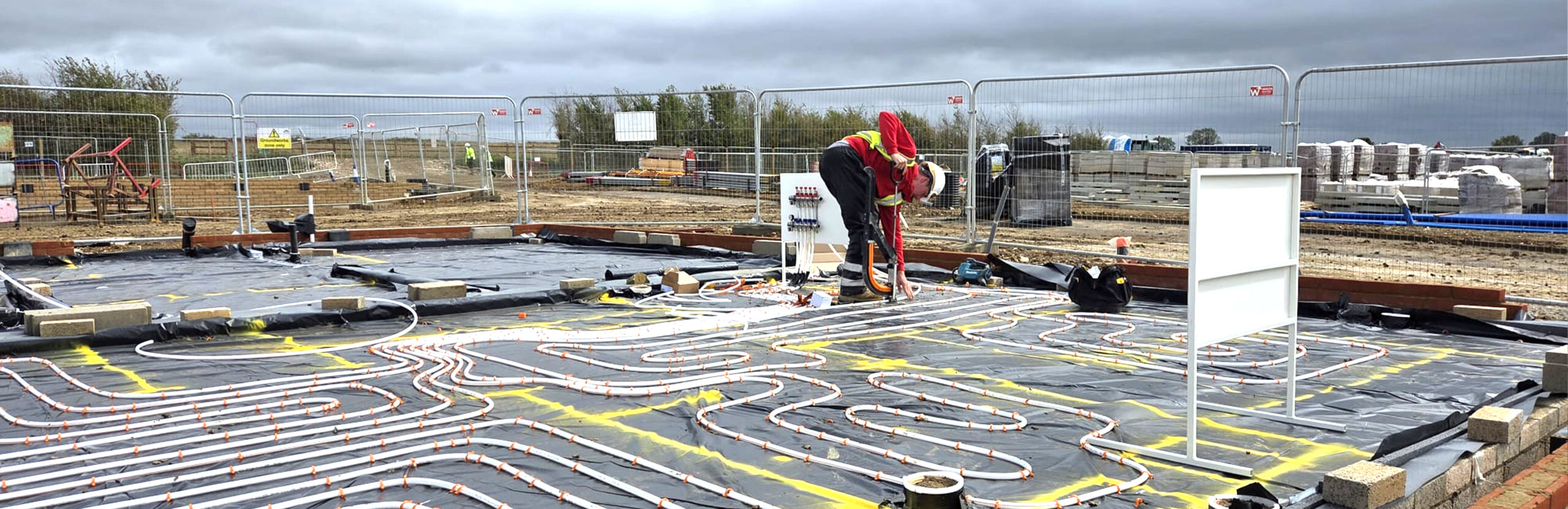
For house builders, the timing of UFH installation is a critical advantage. The smartest and most budget-friendly time to install wet underfloor heating is definitively during the initial build. Installing UFH in a new build is a straightforward process, requiring only simple pipework before the concrete is poured. This avoids the complexities and costs associated with wrestling with existing floorboards or undertaking major renovations. Similarly, wiring for UFH during construction is a smooth process, planned in from the start, saving time, disruption, and ultimately, money. First fix wiring during a build is “significantly cheaper than retrofitting”.
While traditionally, retrofitting UFH to a project has involved very intrusive works, such as digging up existing floors prior to laying pipework and re-screeding, modern low-profile UFH systems make this type of heat emitter a viable option for almost any home. These clever and adaptable systems, featuring pre-formed, lightweight panels can be laid directly onto existing floor surfaces with minimal disruption to existing floor and door arrangements, often eliminating the need to adjust skirting boards or doors. Most installations are completed quickly, often within a single day for the UFH system itself and offer quicker drying times for screeded versions. The traditional barrier for UFH in renovations was the significant disruption and floor height build-up. The development of “low-profile” and “overlay” systems directly addresses these challenges, making UFH feasible for a much wider range of projects, including older homes, listed buildings, and those with floor height concerns. This innovation directly expands the addressable market for UFH beyond just new builds. For large-scale renovators, this means they can now offer the premium benefits of UFH to clients undertaking significant refurbishment projects without the prohibitive costs or structural challenges previously associated with it. This allows them to tap into a larger market segment, enhance their service offering, and deliver modern, efficient heating solutions across their entire portfolio, cementing their reputation as versatile and forward-thinking professionals.
UFH systems are designed for exceptional longevity. Water-based UFH can routinely reach lifespans of 35 years or longer, with the actual pipes themselves often designed to upwards of 75 years under typical use. This significantly outperforms traditional radiators, which can start to lose efficiency after about 12 years. While not entirely maintenance-free, UFH requires less upkeep than traditional central heating systems. Wet UFH systems typically do not use metal pipes in a typical circuit, which significantly reduces the need for power flushing due to corrosion and sediment buildup, a common and costly maintenance issue with radiator systems. Annual or bi-annual check-ups (every 18-24 months) are advisable to ensure peak efficiency, including system pressure checks, water quality inspection, and air bleeding. The extended lifespan and lower maintenance requirements translate directly into significantly reduced lifecycle costs for the homeowner. Fewer breakdowns, less frequent replacements, and simpler, less intrusive upkeep mean substantial savings and less hassle over decades. For developers, this means delivering a product with higher long-term reliability and fewer post-occupancy issues, which contributes directly to customer satisfaction and positive referrals. It strengthens the “smart investment” argument by demonstrating that the initial outlay for UFH is recouped not only through energy savings but also through lower ongoing ownership costs and greater peace of mind for the end-user.
Installing wet underfloor heating is a strategic investment that can significantly increase property value. It is often seen as a desirable, modern, and luxurious feature that makes a home stand out in a competitive market. Buyers are increasingly looking for homes with lower energy bills and modern, sustainable heating systems. The “feeling of spaciousness” due to the absence of bulky radiators, combined with the “feeling of luxury” and gently warmed floors, are highly appealing selling points. The UK is committed to delivering 1.5 million new homes by 2030, with UFH rapidly becoming the default specification. The combination of strong market growth projections, the UK’s commitment to new home delivery, and increasing buyer preference for energy-efficient, modern homes indicates a clear and accelerating market trend. Developers who proactively adopt UFH are not just complying with regulations; they are aligning their business strategy with the future direction of the housing market. This positions UFH as a strategic asset for developers, ensuring their properties remain highly desirable and competitive in a rapidly evolving landscape. It is about capturing future market share, enhancing brand reputation as a forward-thinking and sustainable developer, and ultimately, maximising sales velocity and property values in the long term.
While underfloor heating typically has a higher initial installation cost than traditional heating systems, the continuous energy savings it offers over time can eventually lead to greater financial benefits. The “payback period” – the duration it takes for financial benefits to equal or surpass the initial cost – is influenced by factors like energy prices, insulation, and usage, and it shortens as energy savings accumulate. This makes UFH an “economically viable choice for the long run”. Furthermore, the added property value and increased market appeal contribute significantly to the overall return on investment.
VII. Why Partner with Ambiente UFH? Your Success is Our Priority.
As a leading UK-based underfloor heating manufacturer and supplier, Ambiente UFH is committed to empowering the trade. We provide:
- Expert, tailored UFH system design for every project.
- High-performance, UK-compliant components you can trust.
- A 5-year warranty on all our systems.
- Fast, reliable delivery and unparalleled technical support, ensuring seamless project execution.
We understand the evolving needs of house builders and large-scale property renovators. Our focus is on delivering UFH systems that not only meet the stringent requirements of the Future Homes Standard but also provide tangible benefits in terms of efficiency, comfort, and long-term value for your projects.
VIII. Your Action Plan: Leading the Way in Modern Construction
For house builders and large-scale property renovators, the path to FHS compliance and market leadership is clear.
First, make UFH a primary solution with heat pumps. Position Ambiente underfloor heating as the high-performance solution for all new build projects under the Future Homes Standard. Furthermore, leverage the innovations in low-profile systems to extend this high-value solution to suitable large-scale renovation projects.
Second, invest in skills and expertise. The shift to UFH and heat pumps requires new competencies. Leverage initiatives like the Heat Training Grant Scheme (offering up to £500 towards certified training) to upskill teams in UFH and heat pump integration. Becoming the trusted expert in these integrated systems is crucial for market leadership.
Third, embrace smart controls. Implement zoning, Model Predictive Control (MPC), and Time-of-Use (TOU) compatibility as standard features. This maximises system performance, delivers long-term energy savings for homeowners, and aligns projects with the smart-grid ready future.
Finally, lead the conversation with developers and clients. Proactively educate them on the undeniable, multi-faceted benefits of UFH – from its unparalleled comfort and efficiency to enhanced air quality, design freedom, and guaranteed FHS compliance. Integrate Ambiente UFH into early-stage specifications, positioning it not as an add-on, but as a foundational element of modern, future-proof properties. The action plan explicitly moves beyond simply listing the benefits of UFH to providing strategic advice for builders. It emphasises upskilling, embracing advanced technology, and proactive client education. This indicates that the market is evolving from a transactional product-based model to one that values comprehensive, integrated solutions and expert guidance. For Ambiente UFH as manufacturers and suppliers, this means focusing on providing holistic support, from design and technical expertise to training and marketing materials that empower our trade partners. For builders, it signifies an opportunity to differentiate themselves by offering a complete, future-ready solution, building stronger client relationships based on trust, expertise, and delivered long-term value, rather than just competing on initial cost.
IX. Conclusion: Build for the Future, Today
Underfloor heating is not just a trend; it is the future of residential heating, rapidly becoming the default specification for new developments. Ambiente UFH systems offer superior output scores, unmatched occupant comfort, significant reductions in carbon emissions, and a distinct competitive advantage in a rapidly growing market. By embracing Ambiente UFH, businesses are not merely installing a heating system; they are making a strategic investment in homes that are truly Future Homes Standard compliant, highly efficient, intelligently smart, and inherently future-proof.
The path to FHS compliance and market leadership is clear. Businesses should not be left behind in the evolving landscape of modern construction. To build homes that are truly future-ready, it is advisable to consider Ambiente UFH for upcoming projects.


